
Free pads or a vending machine? How they work together in Nepal
Key takeaways
- Free pads reach every eligible student but only work if supply is on time and a girl can get a pad when she needs it.
- A vending machine is available at any hour and needs no one to ask, but someone has to pay for the stock.
- Preloaded cards let a school give free pads through a machine, which joins the two approaches.
- Either way, a machine that is empty or broken helps nobody.
On this page
People sometimes frame this as a choice. It is not. Free pad distribution and vending machines do different jobs. The schools that do best use both, with clear rules about who stocks and who pays.
What free distribution does
Nepal’s government has supplied free pads to girls in community schools since 2019-20, under the Sanitary Pad (Distribution and Management) Procedure 2019. It reaches every eligible student without asking her to pay, which matters most for girls from families who cannot afford pads.
Its weak points are practical. The Kathmandu Post reports that pads sometimes arrive late or in short supply, and that the oversight committees are often inactive. Pads handed out by a teacher or the office also mean a girl has to ask. At the moment she most needs a pad, the office may be shut, or the teacher may be a man.
What a vending machine does
A machine is there at any hour. It needs no one to ask, and it gives privacy. In an office or public toilet it is often the only option.
Its weak points are also practical. A machine that takes money does not help a girl who has none. And a machine is only as good as its upkeep. A report on community schools in Kathmandu Valley found vending machines in all three schools it visited, but not in use. The report did not give the reason, but empty shelves, no one to refill and unrepaired faults are the usual causes.
Putting them together
The two meet well in a machine that takes a preloaded card or a push button.
- The school or local government stocks the machine from its free-pad allocation.
- Each student gets a card. Tapping it releases a pad and records the use.
- Students or staff who can pay can buy extra with cash or QR.
- The record shows how many pads are used, so the school can plan supply.
This keeps the benefits of free distribution (everyone is covered) and the benefits of a machine (any hour, private, counted).
What to settle first
- Who stocks it, and from which budget?
- Who refills it, and how often?
- Who fixes it when it breaks?
- How are students without money covered?
If you cannot answer all four, fix that before buying a machine. See how to choose a machine for a school and how to run one.
Questions people ask
Does free pad distribution make vending machines unnecessary?
No. Free distribution depends on a teacher or office giving out pads, often at set times. A machine gives access at any hour and in private. The two solve different problems.
Who pays for a free machine?
The school, a local government or a donor stocks it. Cards or a push button let students take a pad without paying, and the school records what is used.
Why were vending machines unused in some Kathmandu schools?
One report found machines present but not in use in three schools, without giving the cause. Common reasons elsewhere are empty shelves, nobody to refill them and breakdowns. Plan for those before you buy.
Image credits
- “World Menstrual Hygiene Day celebration by Satirtha- The Helping Hand a non profit organization in India” by Satirtha- The Helping Hand, CC BY-SA 4.0. Resized and cropped.
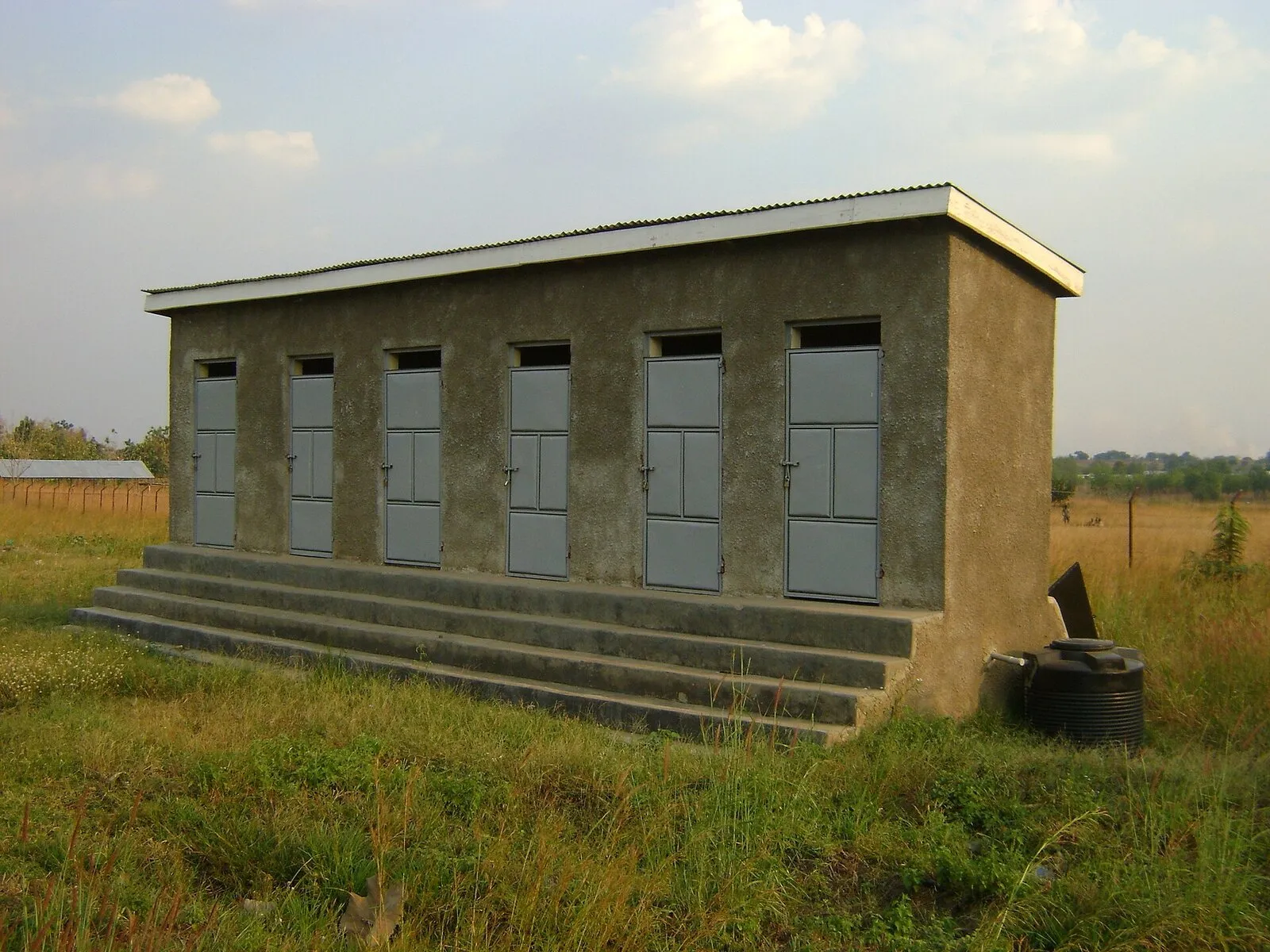
- “School toilet (7829736488)” by SuSanA Secretariat, CC BY 2.0. Resized.

