
Where to put a pad vending machine and a disposal bin in a toilet block
Key takeaways
- Put the machine and the bin where a girl can use them without being seen or crossing a boys’ area.
- Each cubicle needs a lockable door and a lidded bin. Water and soap should be in a private space.
- Give the machine a dry wall near a power point, and a steel anchor so it cannot be pulled off.
- A changing space with a hook and a mirror helps. Light matters as much as privacy.
On this page
A pad vending machine in the wrong place is a lump of steel. If a girl has to cross the playground to reach it, or buy a pad where boys can see her, she will not. These are the practical points that decide whether a machine and a bin get used.
What guidance says
School standards and checklists from UNICEF, WHO and others share a few points on menstrual hygiene in toilet blocks.
- Private, lockable toilets. School standards hosted by SuSanA say toilets should be private, meaning they lock from inside.
- A lidded bin in every cubicle. Uganda’s national school standards, for example, call for lidded bins inside girls’ latrines.
- Water and soap in a private space for girls to manage menstrual hygiene, a point in this school sanitation checklist.
- A changing space. Ghana’s school standards, for example, ask for a girls’ changing room with water, mirrors and hooks.
- Enough toilets. One set of guidance, attributed to WHO and UNICEF, cites one toilet per 25 girls.
A layout that works
- Put the machine inside the girls’ block. A private lobby or the entrance of the block, never an open corridor.
- Keep it close to the bin. The pad is bought, used and thrown away within a few metres.
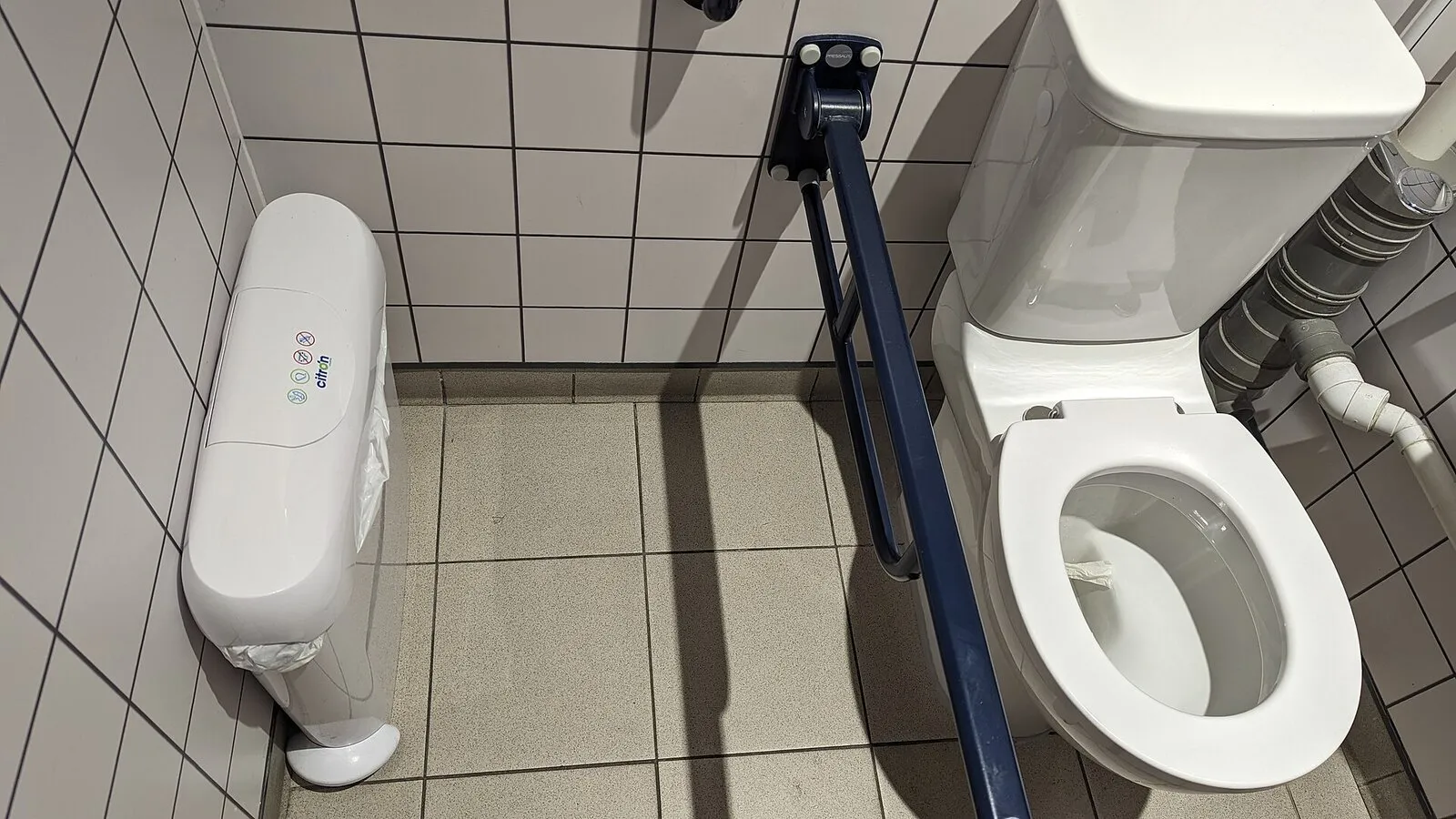
- Put a lidded bin in every cubicle. Do not rely on one bin by the door.
- Add a handbasin with soap in the same private space.
- Give it light. A dark corner feels unsafe and gets avoided.
Practical details for the machine
- A dry wall that can carry the weight, with proper anchors so it cannot be pulled off.
- A power socket nearby, at a safe height away from water. A battery backup covers short cuts.
- Space to open the door for refilling, and a clear view of the display.
- A place to stand that does not block the path to the cubicles.
For an incinerator
A wall-mounted incinerator also needs a wall, a power point and room to vent. Keep it clear of flammable materials, mount it where a girl can reach the door easily, and keep the ash tray reachable for the person who empties it. Read how a pad incinerator works first, and what to ask before buying one.
For offices and public toilets
The same rules apply. In an office, put the machine where staff pass without a crowd. In a public toilet, put it inside the women’s section, not in a shared entrance.
Questions people ask
Should the vending machine be inside the toilet block?
Yes where possible, in a private lobby or inside the girls’ block, so a girl can buy a pad and change without walking across the school.
How many toilets per girl?
One set of WHO and UNICEF-based guidance cited in school standards is one toilet per 25 girls. National standards differ, so check your own country’s rules.
Does the machine need a power socket?
Yes. A mains-powered machine needs a safe, dry socket nearby. A battery backup keeps it running through short cuts.
Image credits
- “Menstrual Hygiene Management room for girls at school” by Grace Remmington/REACH, CC BY 2.0. Resized.
- “Citron Hygiene sanitary bin in a disabled toilet” by Lajmmoore, CC BY-SA 4.0. Resized.

