
How a sanitary pad vending machine works, from coin slot to pad
Key takeaways
- A pad vending machine is four things: a payment unit, a dispenser, a controller and a locked cash box.
- Coins are simplest. Notes, RFID cards and QR codes each add something that can fail or needs a network.
- Most field failures are jams, full cash boxes, empty shelves and power cuts, not the electronics.
- Look for a stock display and a machine that stops selling when it cannot dispense.
On this page
A pad vending machine looks simple from outside. Inside, four parts do the work. Knowing them helps you ask the right questions when you choose one, and tells you what to check when a machine stops working.
The four parts
The payment unit. This is the coin slot, note reader, card reader or QR screen. It decides whether a sale is real.
The dispenser. A shelf or spiral holds the packets. When a sale is confirmed, a motor or lever pushes one packet to the delivery tray.
The controller. A small circuit board reads the payment unit, runs the motor, drives the display and counts sales and stock. It is the part that decides to stop selling when something is wrong.
The cash box and the body. A locked metal box holds the money. The body keeps hands and tools out. In a school or a bus park, a heavy steel body matters as much as the electronics.
Four ways to pay
Coins. The mechanism measures each coin and rejects the wrong ones. It is simple and cheap and works in a power cut. The limit is that someone must carry coins, and small coins make a high price awkward.
Cash notes. A note validator reads the note with optical and magnetic sensors and accepts only the ones it knows. It needs to be set for the notes in use, and kept clean, because dust and worn notes cause rejections.
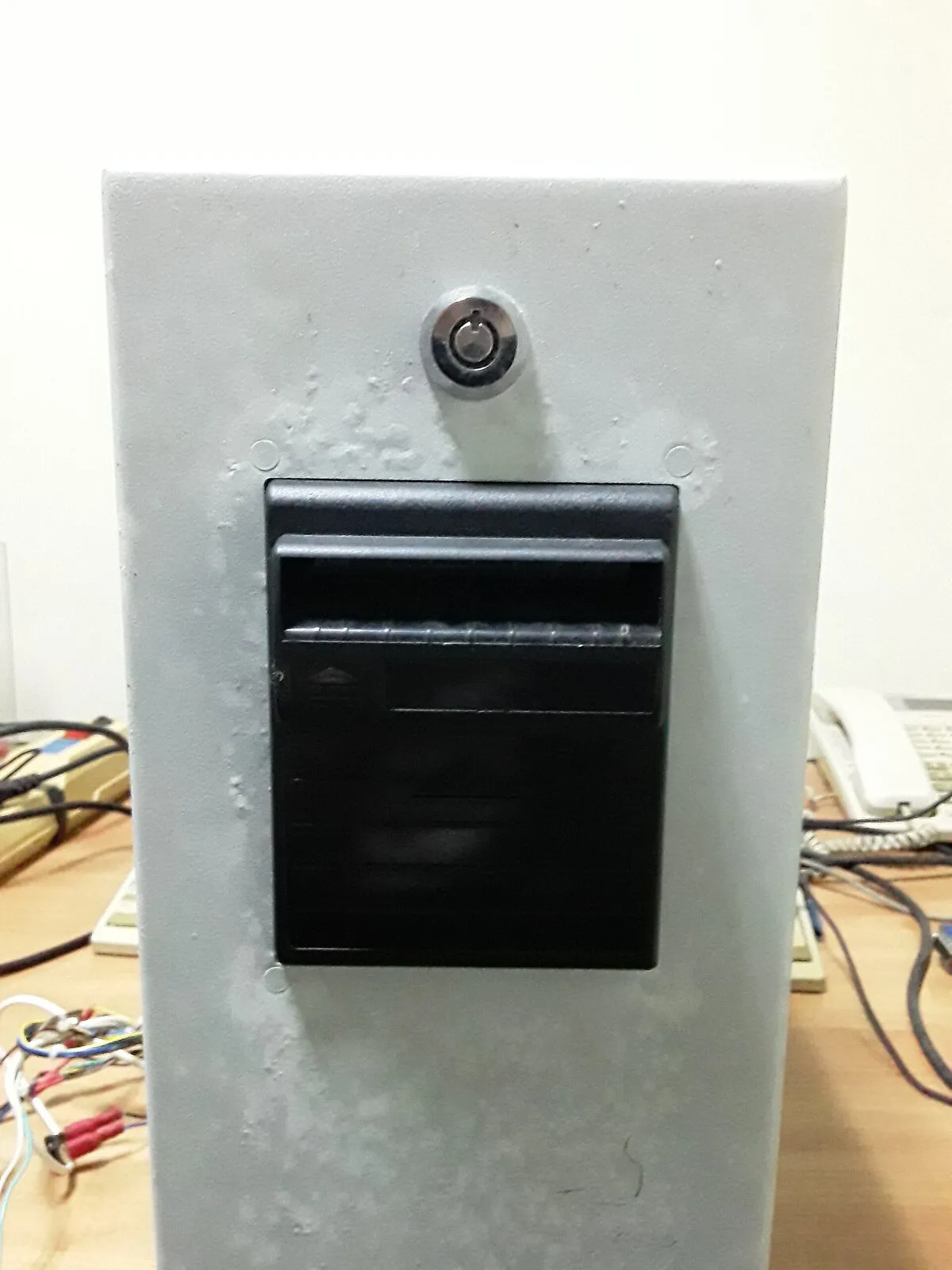
RFID cards. A reader checks a card and takes the price from the balance. This suits a school or a company, where the organisation hands out preloaded cards. Nobody needs cash, and the school can top up cards for students who cannot pay.
QR codes. The customer pays from a phone and the machine waits for the payment to be confirmed. It needs a network and a payment provider. It is convenient in busy public places and risky in places with weak signal.
What the controller should do
The controller is where a good machine differs from a poor one. Three behaviours matter.
- Show stock and price. If the display says Out of Stock, no one puts money in.
- Refuse money it cannot honour. A full cash box or an empty shelf should stop the sale, not take the payment.
- Survive a power cut. A battery that carries the machine through load-shedding means it keeps working when it is needed most.
What fails first in practice
Most failures are not electronics. Packets jam. The cash box fills. The shelf runs empty on the day before an exam. The power drops. A design that deals with these four things will outlast one with a more advanced screen.
Questions people ask
Does a pad vending machine need an internet connection?
Not to work. A coin, cash or card machine can sell on its own. A QR code payment needs a network to confirm the payment, and remote stock reports need one too.
What is the difference between a manual and an automatic machine?
A manual machine usually has a lever or knob and takes coins. An automatic machine has a motor-driven dispenser and a controller, and can take notes, cards or QR payments.
Why do vending machines jam?
The usual causes are pads packed too tightly, damp or deformed packets, and the wrong packet size for the shelf. A good machine is loaded with the pack it was built for.
Image credits
- “Manual levered vending machines of Sanitary napkin and Mask and Tissue in Japan” by TAKA@P.P.R.S, CC BY-SA 2.0. Resized and cropped.
- “CashCode validator” by MSDN.WhiteKnight, CC0 1.0. Resized.

